
Spring 2025
Spring 2025 Construction Update highlights the latest on progress on the nation’s first 220 mph high-speed rail project currently taking shape in the Central Valley. It features work on the railhead project, a new facility in Kern County where equipment and materials necessary to lay track will be housed and deployed using BNSF freight rail lines. Additional highlights include work on the project’s largest construction site, the Hanford Viaduct, where the remaining 112 girders were placed over the San Joaquin Valley Railroad. Check your viewing settings to watch in 4K!
Updates Per Project
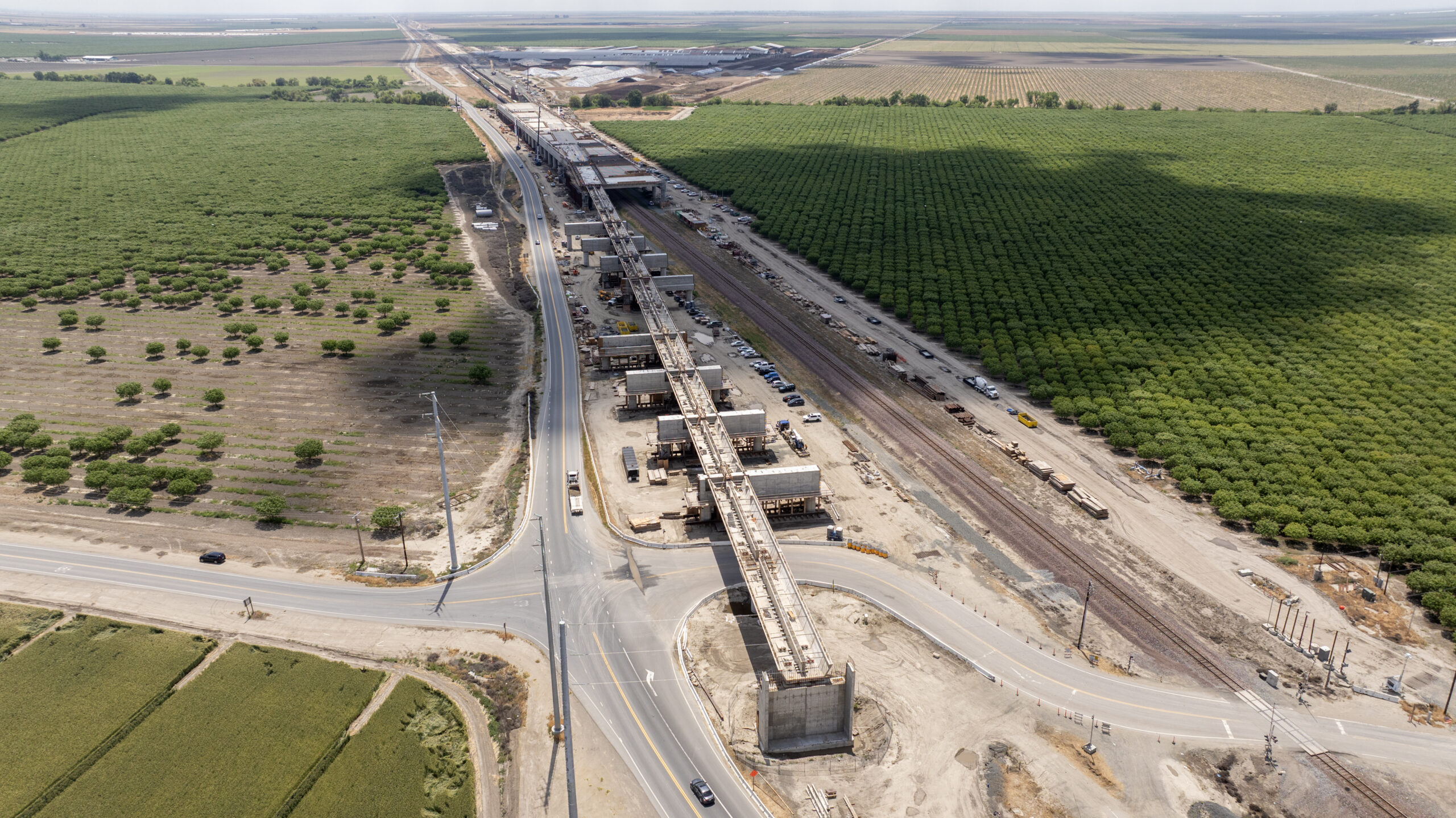
Tule River Viaduct
With all the pre-cast girders placed at the pergola section of the Tule River Viaduct, crews are now working on various portions of the deck including setting metal pan decking, placing rebar and pouring concrete for the deck which consists of longitudinal and topping slabs. Concurrently, crews are now working on pouring shear transfer device diaphragms, which are act as sets of metal arms connecting girders to one another to help transfer and distribute forces of the train.
On the north approach of the structure, crews are forming the tub girder diaphragms, the portion of the structure that helps connect tub girders to each other at the bent caps, as well as connecting and sealing each adjacent tub girder to each other. When complete, the Tule River Viaduct and Pergola will span more than 3,573 feet long and will take high-speed trains over Tule River and the BNSF railroad tracks.
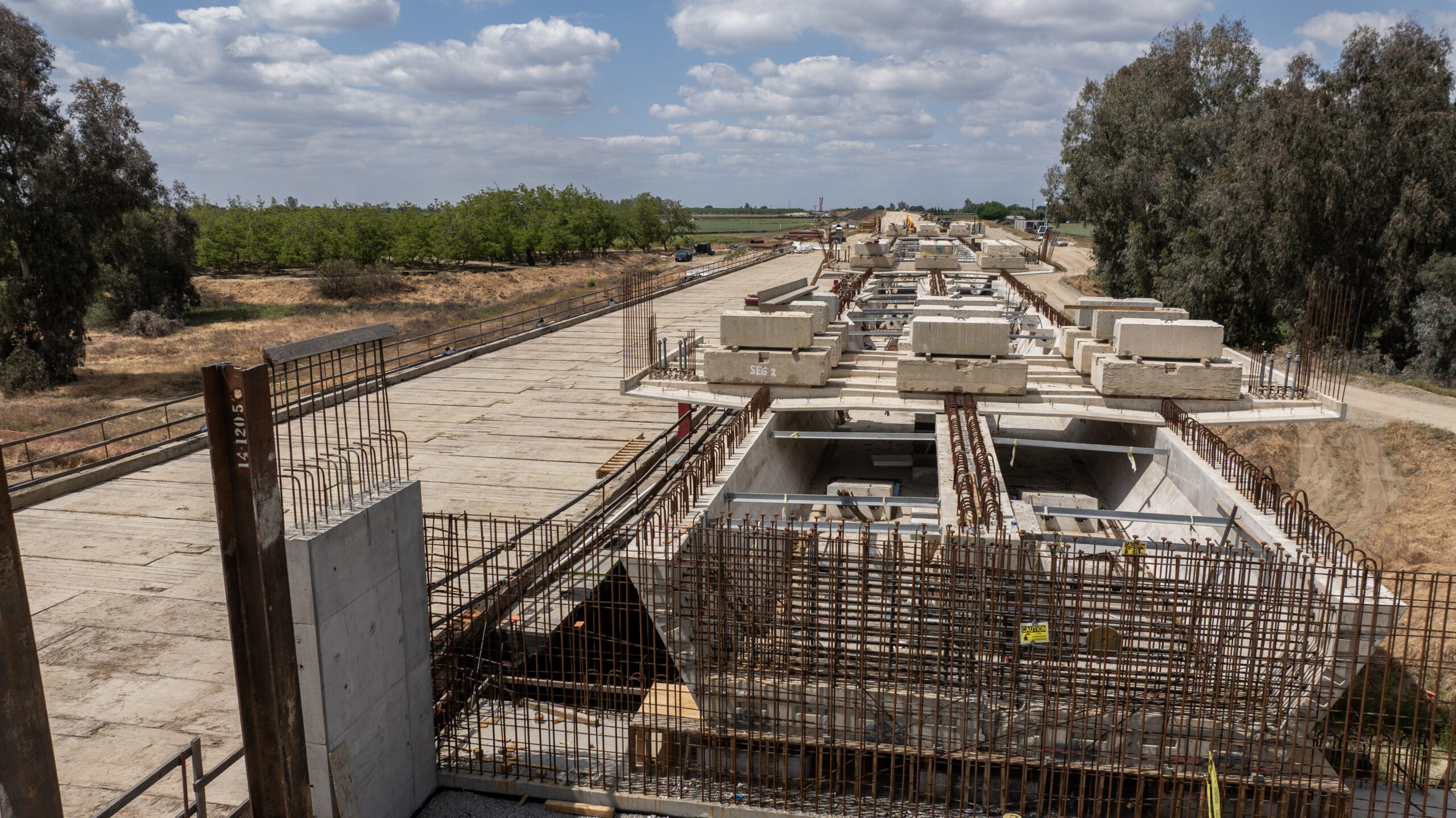
Kings River Bridge
At the Kings River Bridge in Kings County, crews are continuing work on the diaphragms for the abutments and bents of the structure. Deck panels that were manufactured at the DFJV Pre-Cast Facility have been set along three spans with the fourth to be set in the coming weeks. When complete, the Kings River Bridge will span more than 445-feet long, more than 40 feet wide, and will take high-speed trains over the waterway.

State Route 43 Tied Arch Bridge
The arches at the Tied Arch Bridge in Fresno County continue to take shape. The construction team recently completed the installation of all 44 hanger guide pipes, which are designed to house the tension rods that help support the structure. Falsework has also been erected to help ironworkers tie rebar for the future arches that will span over State Route 43. When complete, The Tied Arch Bridge will span 249 feet long and will take high-speed trains over State Route 43.
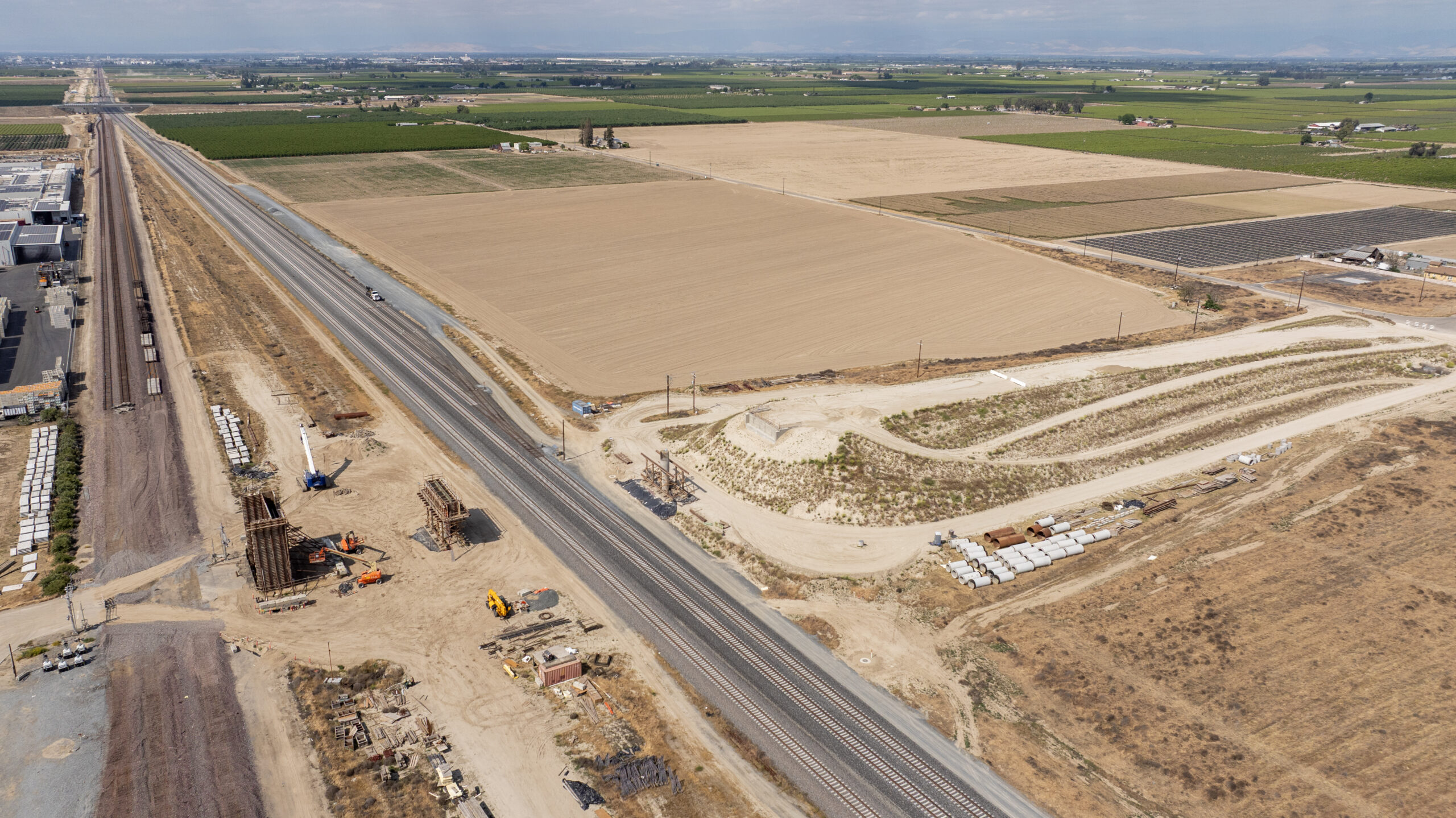
Manning Avenue Grade Separation
Crews are continuing working on the abutments and foundational work at the Manning Avenue Grade Separation in Fresno County. More than 412 cubic yards of concrete have been placed to form the abutment on the west side of the grade separation. The formwork should be removed in May. Crews are also working on the foundational work at the bents of the structure. When complete, the Manning Avenue Grade Separation will span 342-feet long and will take traffic over the BNSF railroad and future high-speed rail tracks.
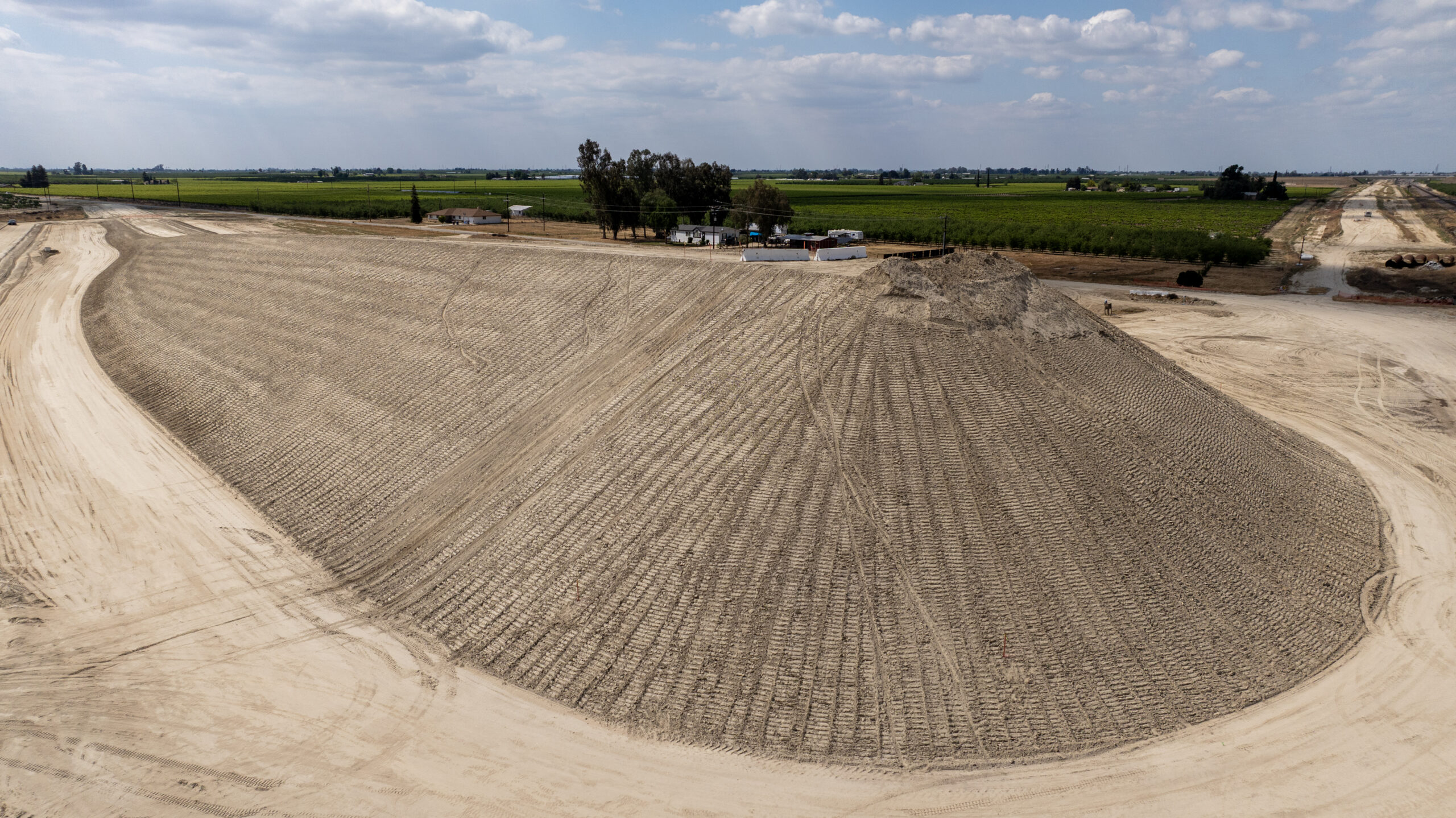
Nebraska Avenue Grade Separation
At Nebraska Avenue in Fresno County, crews have finished hauling embankment for the approaches on the east and west side of the structure. The approaches are now currently in settlement. On the east side, the mechanically stabilized earth wall is also built and complete. Crews have also began substructure work on the bents of the structure. The Nebraska Avenue Grade Separation is the longest grade separation to be built in Construction Package 2-3 spanning at 785 feet long. When complete, traffic will be able to travel over the BNSF railroad and future high-speed rail tracks safely.
Church Avenue Grade Separation
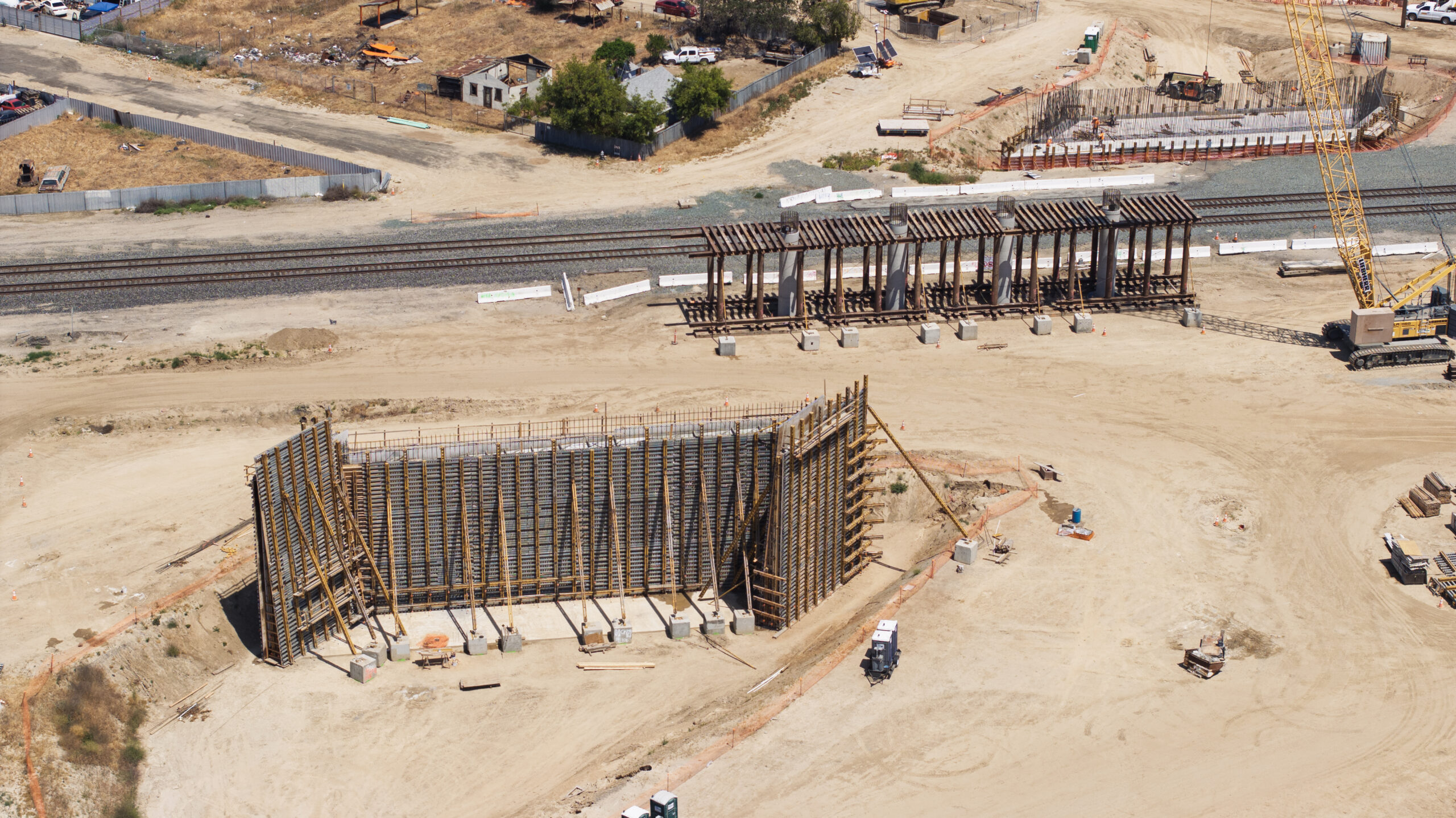
Progress continues at the Church Avenue Grade Separation in the City of Fresno. Crews recently removed the formwork on abutment one, west of the high-speed rail corridor. Crews also placed more than 1,070 cubic-yards of concrete at abutment three, located on the east side of the high-speed rail corridor and existing Union Pacific tracks. Crews will continue foundational work including cast-in-drilled-hole (CIDH) pile installation in the coming weeks. When complete, the Church Avenue Grade Separation will consist of two structures. One structure will take traffic over the future high-speed rail and Union Pacific tracks and will span 340-feet long and 84.5-feet wide.
Cesar Chavez Underpass
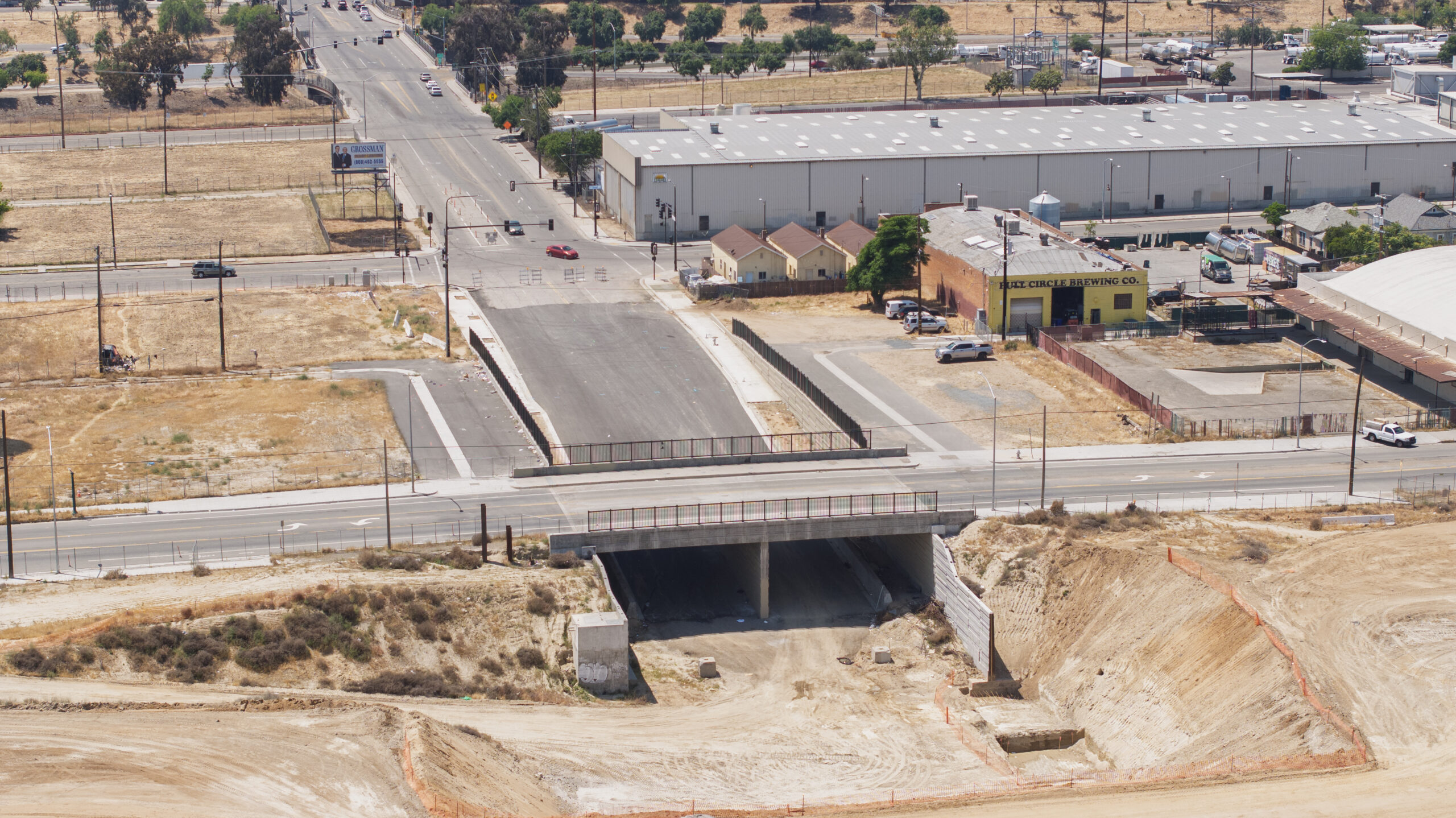
At the Cesar Chavez Underpass (formerly known as the Ventura Street Underpass), crews continue to work on the construction of the Cesar Chavez Boulevard and H Street intersection by installing the streetlight infrastructure for the underpass. Shoring and pile drilling is currently in progress to allow for the completion of the Union Pacific bridge and high-speed rail bridge, which will take trains over the underpass. When complete, the underpass will serve as a grade separation and will eliminate the previous Union Pacific at-grade railroad crossing, allowing traffic to travel underneath the existing railroad and future high-speed rail tracks.
Tulare Street Underpass
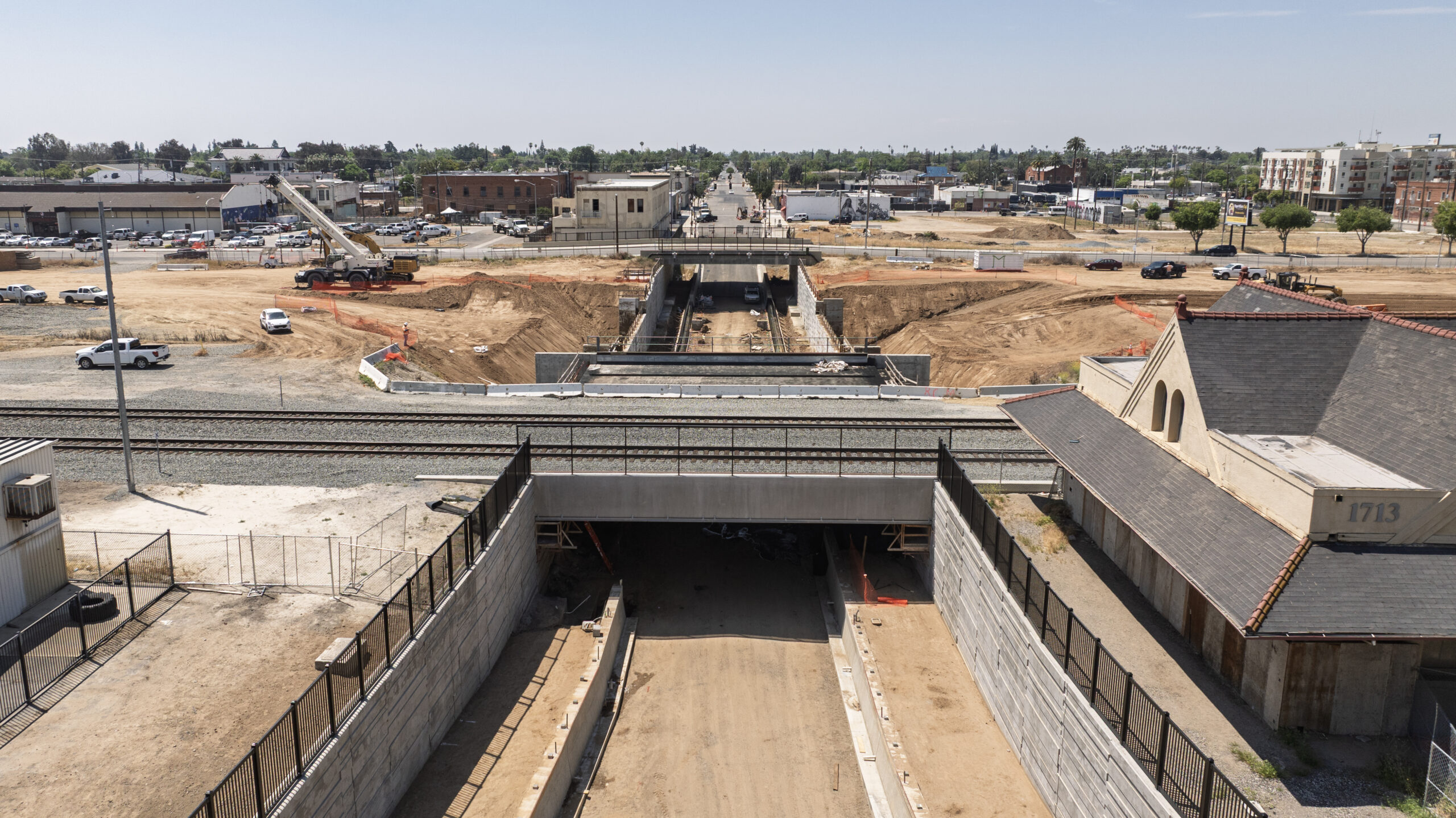
Near downtown Fresno, the Tulare Street Underpass continues to take shape. Crews have tied rebar and poured concrete to form the remaining retaining walls of the underpass. Mass excavation for the underpass has been completed, clearing the remaining soil necessary for the roadway construction that will connect downtown Fresno with Chinatown. Recently, all 14 girders needed for the second bridge were also placed over the underpass, which will allow high-speed trains to cross over the roadway. Crews are now working on the gravity walls, sidewalks, and streetlights for the underpass. The Tulare Street Underpass is expected to be completed and open to traffic this summer.
Avenue 17 Grade Separation
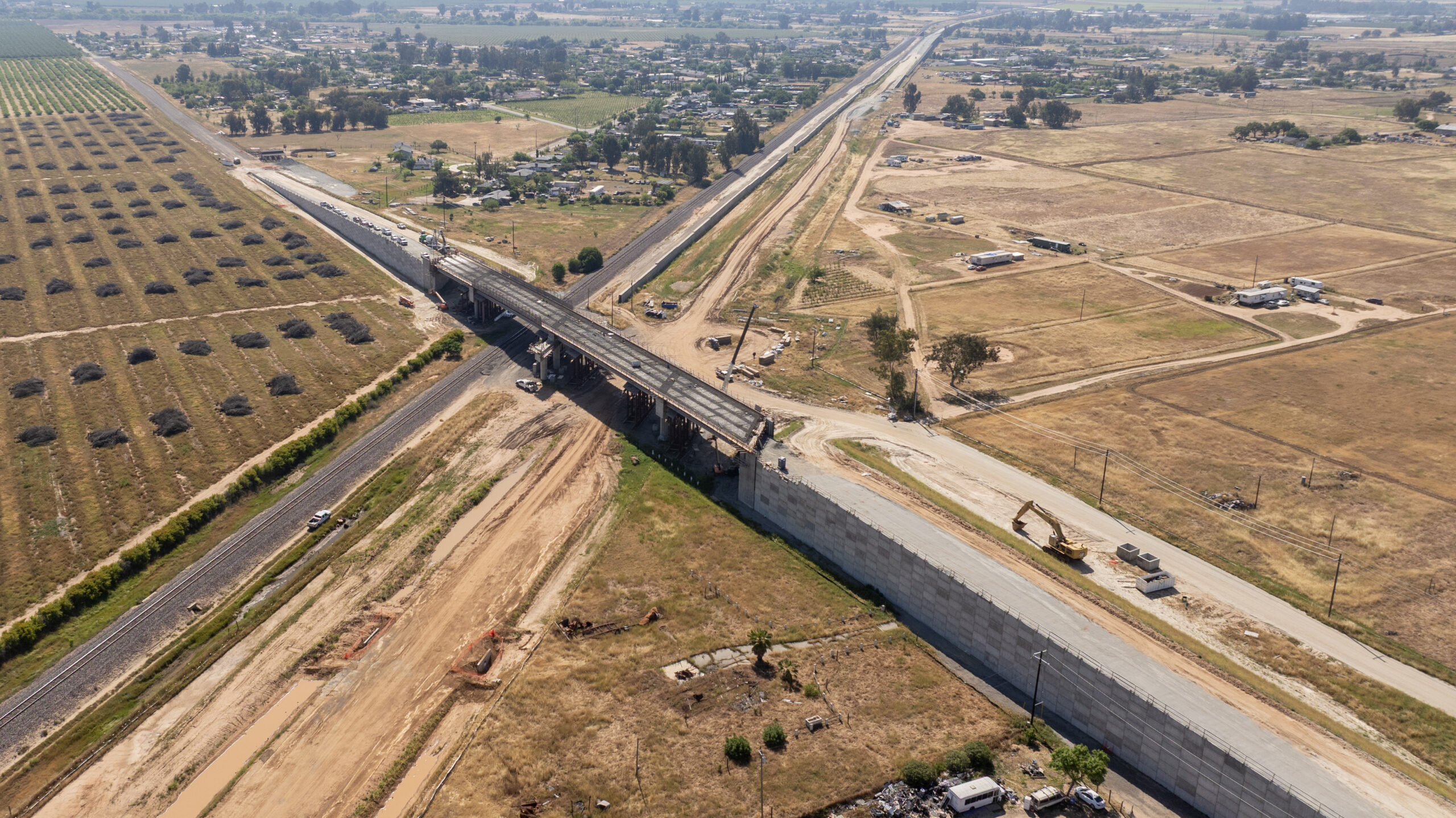
At Avenue 17 in Madera County, crews are continuing to work on the superstructure of the future overpass. Recently, workers completed the rebar and concrete placement for the deck of the structure. The east and west approaches are also taking shape as crews continue to backfill and place MSE wall panels. The four-span structure will serve as a new roadway for Madera County taking vehicular traffic and pedestrians over the future high-speed rail and existing BNSF railroad tracks. The structure will be 614-feet long and more than 43-feet wide when complete.
Road 26 Grade Separation
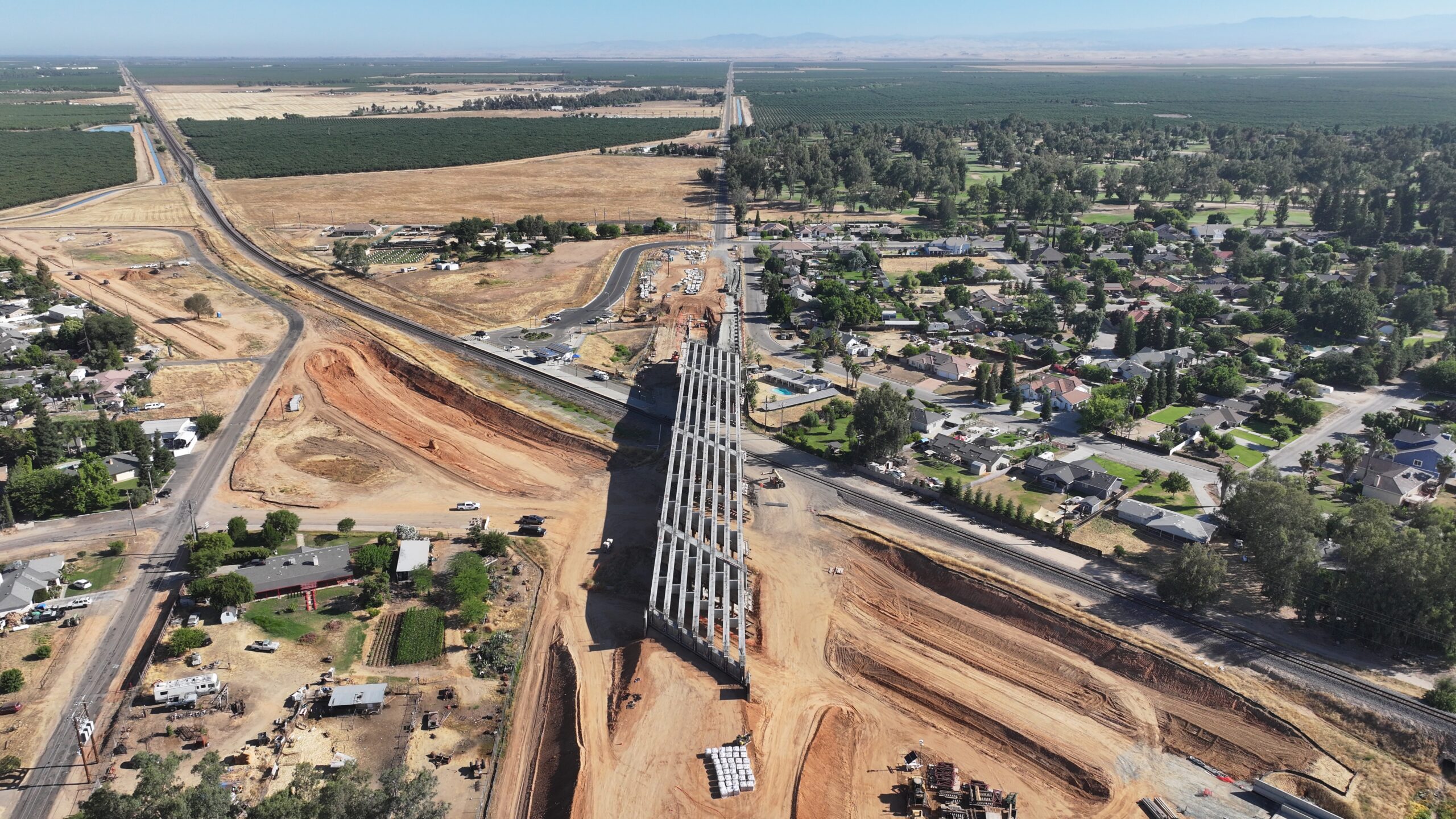
In Madera County, the Road 26 Grade Separation continues to make progress. All 49 pre-cast concrete girders have been placed for the superstructure. Crews continue to tie rebar and pour concrete for the structure’s intermediate diaphragms. Workers are also placing panels and backfilling for the MSE wall along the north approach and backfilling and compacting the embankment for the south approach of the overpass. When completed, the future structure will be a three-way lane roadway and span 636-feet long and 68-feet wide, improving safety in the area for traffic and pedestrians by taking them over the existing BNSF railroad and future high-speed rail tracks.
Hanford Viaduct
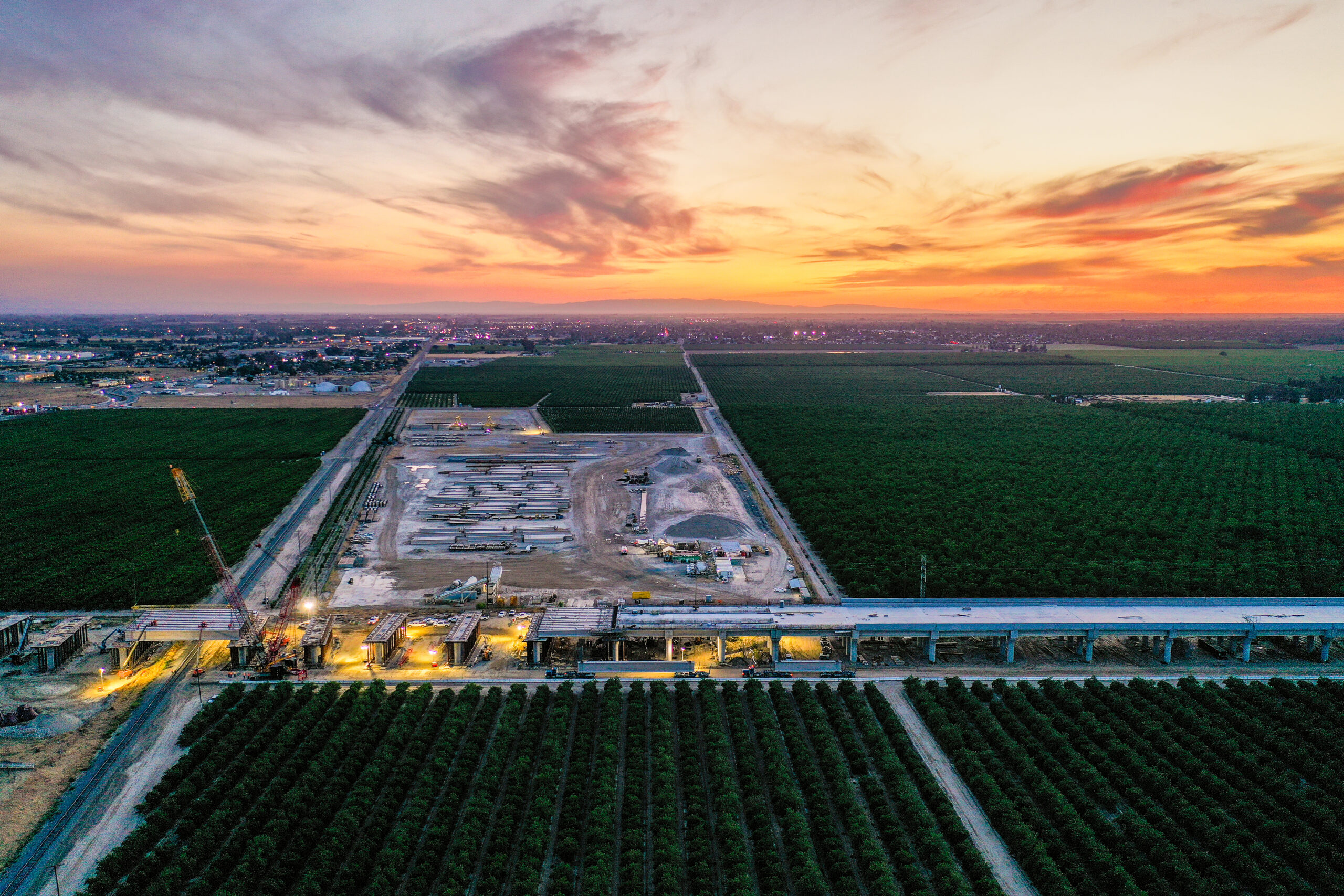
Only 112 of the 978 pre-cast concrete girders remain for the build out of the Hanford Viaduct. This month, crews will begin placing the remaining girders that will span over the San Joaquin Valley Railroad. Crews are also placing concrete to form the parapet and derailment walls at the southern end of the structure that spans over State Route 198. More than 40,300 cubic-yards of concrete have been placed to date at the Hanford Viaduct. When complete, the Hanford Viaduct will span 6333-feet long and will take high-speed trains over the highway or to the Kings/Tulare Regional Station.
Central Avenue Grade Separation
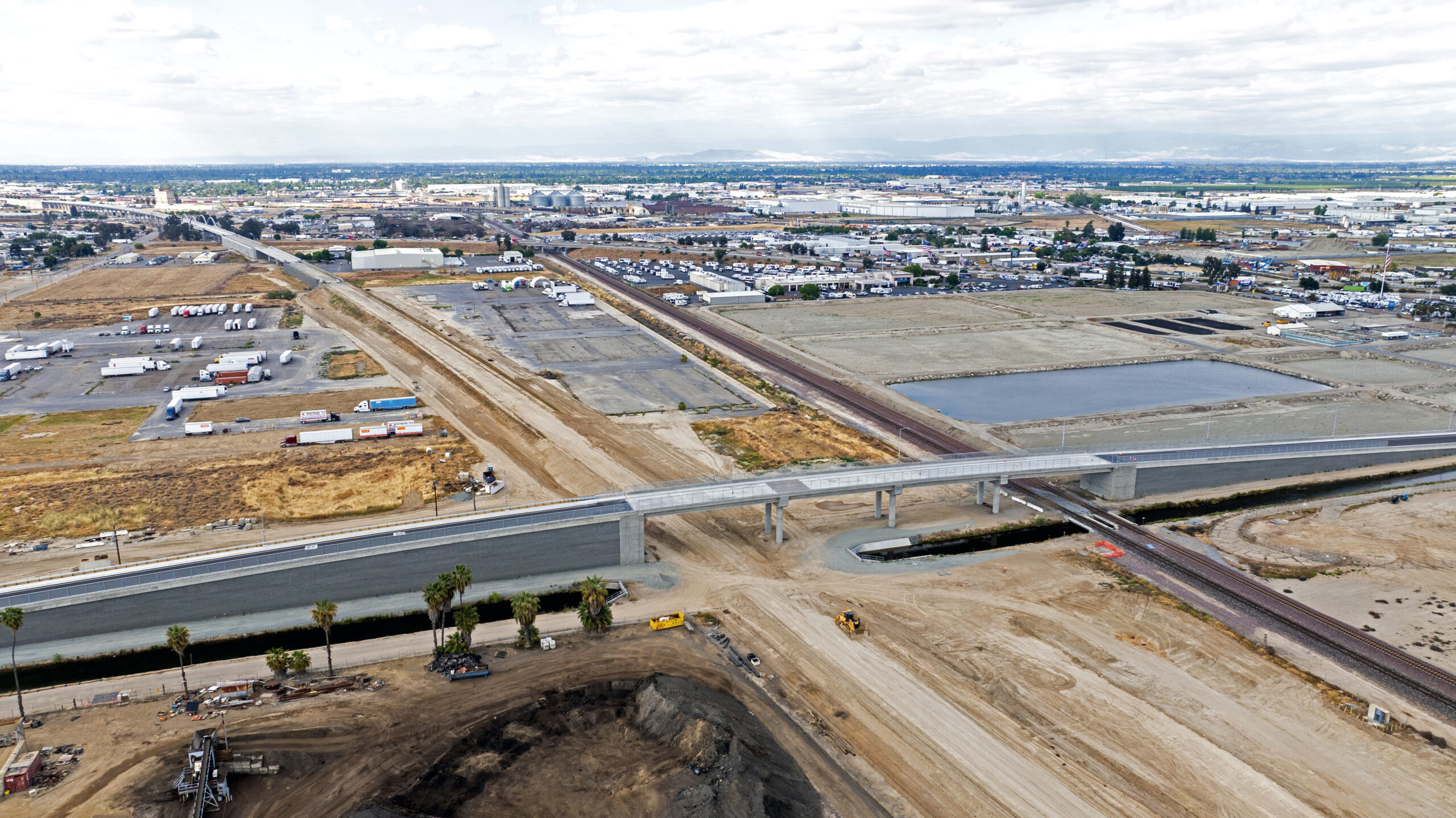
Construction is nearly completed at the Central Avenue Grade Separation in Fresno County. Recently, crews striped the roadway and recently installed light poles and handrails. With final touches underway, the grade separation will open to traffic this spring. When complete, it will span 432-feet in length, more than 40-feet wide, and will take traffic and pedestrians over the high-speed rail and BNSF railroad tracks safely.